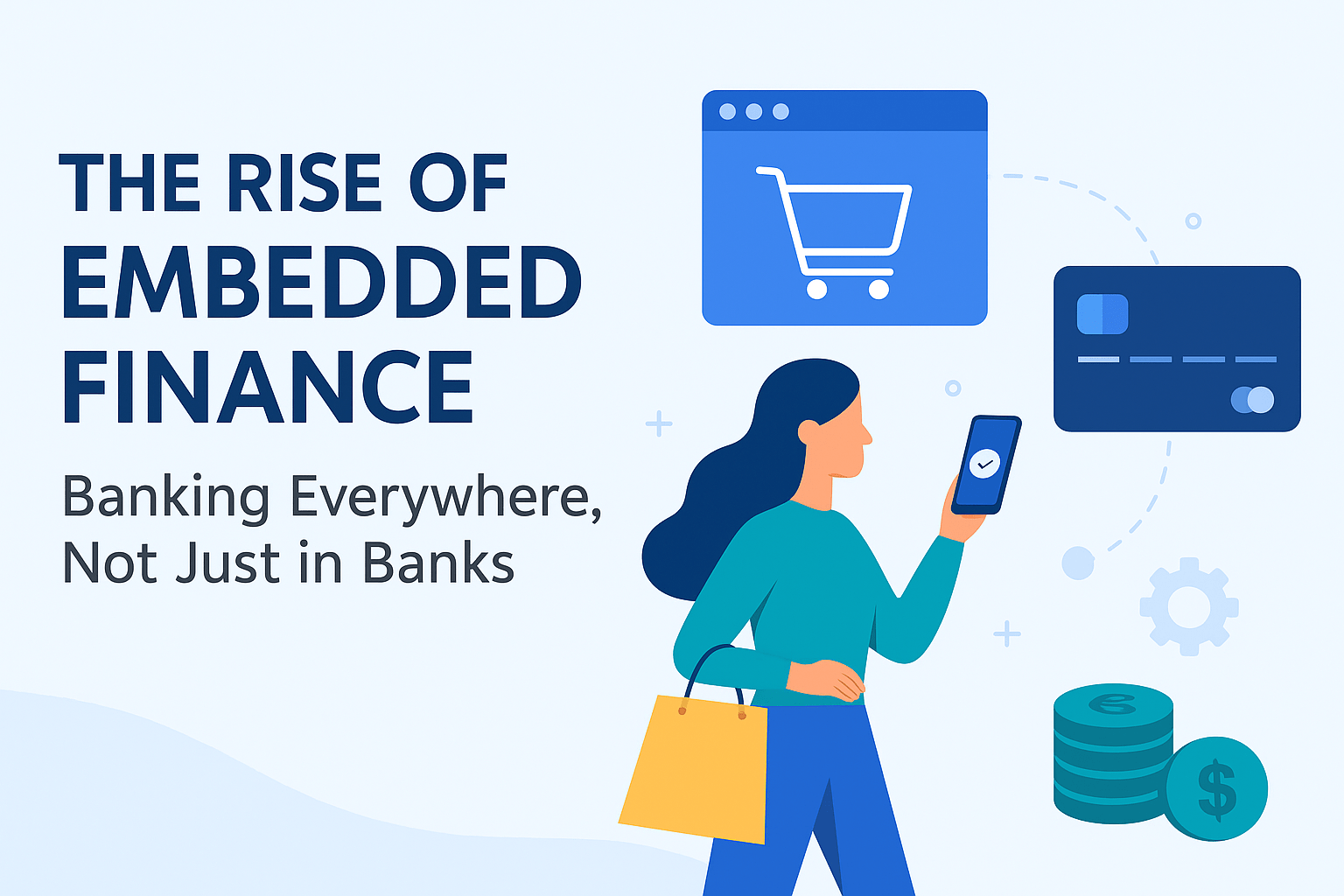
In today’s digital-first world, financial services are no longer confined to the walls of banks. With the emergence of embedded finance, banking is happening everywhere—within e-commerce platforms, ride-hailing apps, retail marketplaces, and even social media. This innovation is changing how people pay, borrow, invest, and insure, making financial services more accessible and user-friendly than ever before.
What is Embedded Finance?
Embedded finance refers to the seamless integration of financial services into non-financial platforms. Instead of redirecting customers to a bank, businesses can now offer services like payments, lending, insurance, and investments directly within their platforms. For example, when you book a cab and pay within the app or get instant credit while shopping online, that’s embedded finance in action.
Why is Embedded Finance Growing?
Several factors are driving the rapid adoption of embedded finance:
- Consumer demand for convenience – Customers want instant financial solutions at the point of need.
- Advancements in technology – APIs and digital infrastructure make integration smoother than ever.
- Shift toward cashless economies – Governments and fintech companies are pushing digital-first transactions.
- Revenue opportunities for businesses – Companies can create new income streams by offering financial products.
Benefits of Embedded Finance
Embedded finance creates value for both consumers and businesses.
For Consumers:
- Faster and Easier Payments – Transactions happen in-app, without switching to a bank or external payment gateway.
- Instant Access to Loans and Credit – BNPL and micro-lending solutions give customers flexibility to manage finances.
- Personalized Financial Products – Data-driven insights allow platforms to offer tailored credit, insurance, or investment options.
- Better Customer Experience – Seamless integration means fewer steps, less friction, and more trust.
For Businesses:
- Increased Customer Loyalty – Offering financial services directly strengthens customer relationships and encourages repeat usage.
- Higher Transaction Volumes – Customers spend more when they have flexible payment and credit options.
- New Revenue Streams – Platforms can earn through fees, commissions, or partnerships with financial institutions.
- Competitive Advantage – Businesses that adopt embedded finance stand out by offering added value within their ecosystem.
Conclusion
Embedded finance is reshaping industries by blending banking services with everyday platforms. Whether it’s instant credit on Amazon, digital wallets in Uber, or capital access for Shopify merchants, these solutions reduce barriers and make finance part of daily life.
For consumers, it means greater convenience and accessibility. For businesses, it drives growth, revenue, and long-term loyalty. The future of finance lies in being everywhere the customer already is—not just inside a bank.