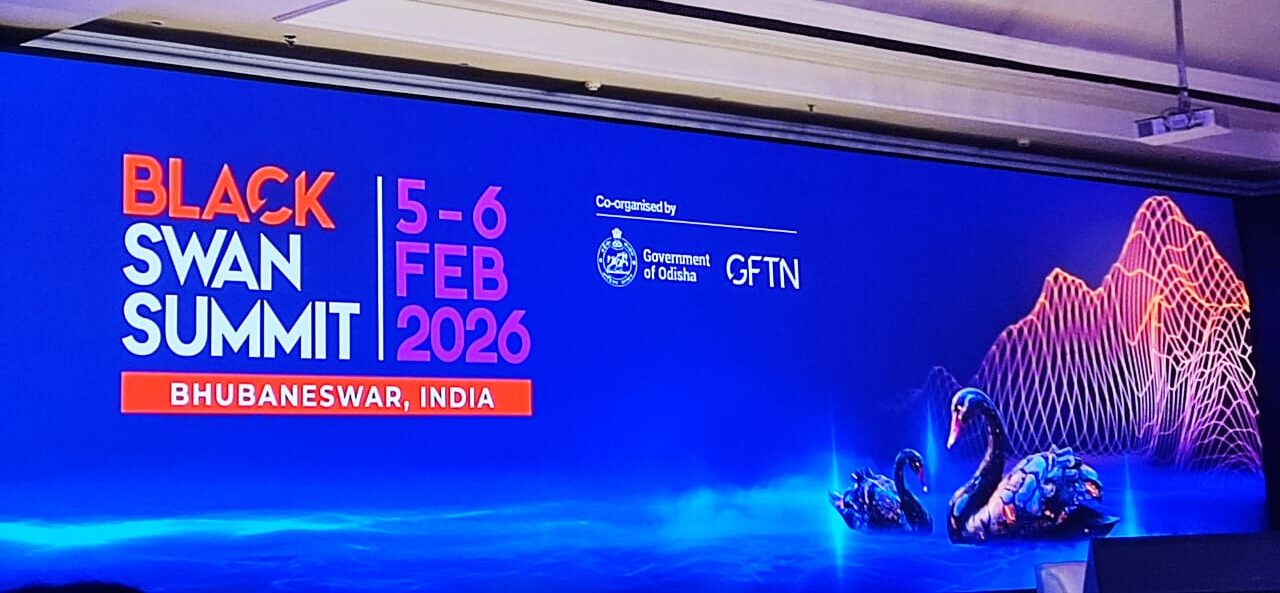
In early February 2026, Bhubaneswar quietly did something that very few Indian cities outside the traditional tech corridors have managed to do — it hosted a global conversation about the future of finance. The Black Swan Summit India 2026, held on February 5 and 6, was not just another technology conference. It felt less like a startup event and more like a strategic alignment between governments, regulators, global financial institutions and technology builders. The tone of discussions made one thing very clear: the next chapter of financial technology will not be about building apps — it will be about building infrastructure.
For companies participating, including PractoMind, the summit was an opportunity to witness the direction in which the financial world is reorganising itself.
A Different Kind of FinTech Conversation
For nearly a decade, fintech conversations in India have revolved around payments, wallets, lending apps and user growth metrics. But the discussions in Bhubaneswar were noticeably different. The focus had shifted from consumers to systems — from transactions to intelligence.
Speakers repeatedly emphasized that India’s digital public infrastructure — Aadhaar, UPI, Account Aggregator and emerging data networks — has already solved access. The challenge ahead is decision-making. The next financial revolution will not be about enabling people to transact digitally; it will be about helping institutions and individuals make smarter financial decisions using technology.
Artificial intelligence therefore emerged not as a buzzword but as an operational necessity. The narrative was practical: AI-driven underwriting for small businesses, automated compliance monitoring, fraud detection engines, predictive risk scoring and personalised financial advisory systems. The goal is a financial ecosystem that does not just process money but understands behaviour.
In simple terms, finance is moving from digital to cognitive.
Why Bhubaneswar Matters in India’s FinTech Map
One of the most striking aspects of the summit was location. Hosting a global fintech forum in Bhubaneswar signals a decentralisation of India’s innovation economy. The intention is not merely symbolic — policymakers are attempting to build a new financial technology corridor in Eastern India focused on talent, operations and global service delivery.
The discussions repeatedly referenced Global Capability Centres — specialised operational hubs where international financial institutions manage analytics, risk, compliance and monitoring functions. Instead of outsourcing coding work, global firms are now outsourcing financial intelligence.
This shift changes the type of companies that will grow in the next decade. The winners may not be consumer-facing apps but organisations capable of running mission-critical financial processes reliably at scale. For investors, this suggests a transition from high-burn startup models to sustainable revenue-driven fintech service platforms.
The Real Theme: Financial Inclusion 2.0
Another important shift discussed at the summit was the definition of inclusion. For years, inclusion meant opening bank accounts and enabling payments. That phase is largely complete in India. The next challenge is economic empowerment — enabling businesses to access capital, helping rural entrepreneurs obtain credit credibility, and allowing individuals to make informed financial decisions.
Technology therefore must evolve from access infrastructure to trust infrastructure. This is where regulatory technology, governance platforms and compliance automation become central. Institutions need tools that allow them to scale safely, regulators need transparency, and users need reliability. The future fintech ecosystem will depend on platforms that connect these three interests simultaneously.
What Participation Means for PractoMind
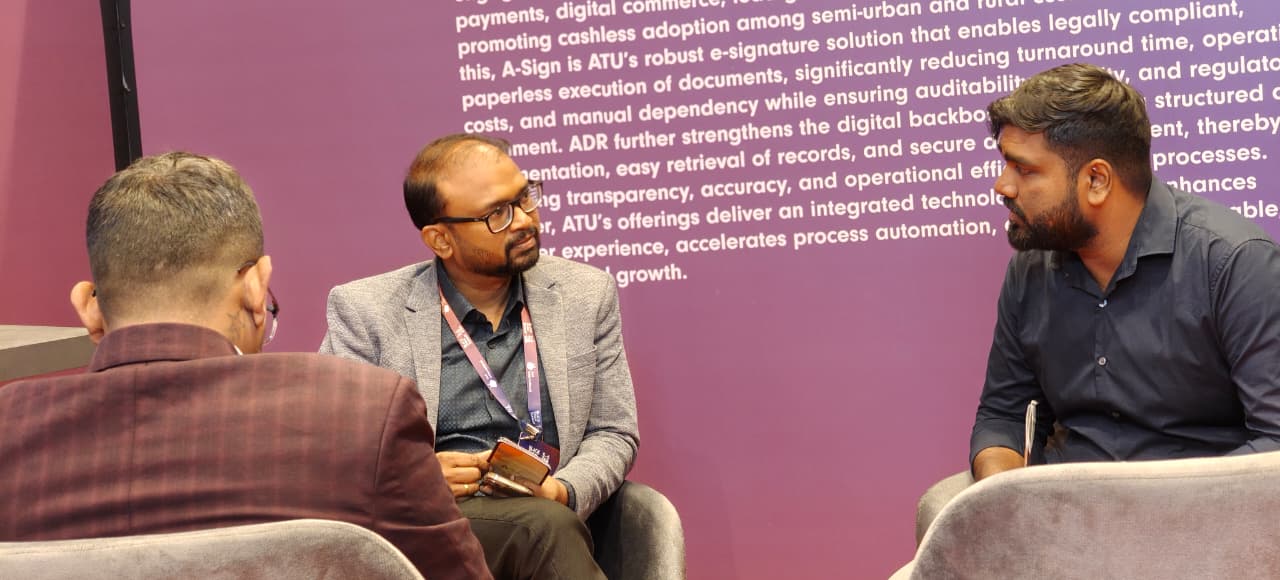
For PractoMind, attending the summit was less about exposure and more about alignment. The conversations made it evident that the financial technology ecosystem is moving toward embedded intelligence and operational partnerships.
Companies will increasingly rely on technology partners who can manage workflows rather than merely provide software. The demand will grow for platforms capable of handling KYC processes, compliance checks, audit trails, risk analysis and financial data orchestration across institutions.
This directly expands the opportunity space for firms positioned between finance and technology. Instead of competing in crowded consumer markets, technology organisations can become infrastructure enablers — the invisible backbone behind financial operations. PractoMind’s participation opens doors to partnerships where solutions integrate into institutional processes rather than compete for retail users.
A Shift From Products to Platforms
Perhaps the most important takeaway from the summit is philosophical. The fintech industry is entering a phase where success will depend less on innovation alone and more on reliability, scalability and trust. The next decade belongs to platforms that:
- understand regulatory frameworks,
- integrate with financial networks,
- and enable institutions to operate efficiently.
In other words, fintech is evolving into financial operating systems. This shift also changes investment behaviour. Investors are increasingly drawn to companies that build recurring-revenue infrastructure instead of customer acquisition-heavy applications. The business model becomes long-term and stable rather than hyper-growth dependent.
The focus is shifting:
From digital access → to intelligent financial decisioning
Why This Summit Matters Beyond the Event
The Black Swan Summit was not a showcase of startups; it was a declaration of direction. India’s role in global finance is expanding from a digital market to a digital operations hub. As financial institutions adopt AI and regulatory complexity increases worldwide, demand for specialised technology partners will grow rapidly. Bhubaneswar’s emergence in this discussion reflects a broader transformation — the creation of new technology clusters aligned with global financial systems.
For organisations like PractoMind, this moment represents timing. Being present at the beginning of such ecosystem formation allows companies to shape solutions alongside industry needs instead of reacting to them later. The Black Swan Summit was not just a conference — it was a policy-industry alignment event announcing India’s next digital economy chapter.
The message was clear:
India will no longer only build fintech apps.
India will operate global finance.
The Road Ahead
The conversations across two days converged on a simple conclusion: the future of fintech will not be defined by who acquires the most users, but by who enables the most institutions. Finance is becoming programmable, intelligent and interconnected. As this transformation unfolds, the opportunity shifts toward companies that can bridge regulatory frameworks, operational workflows and technological intelligence.
The Black Swan Summit therefore was not merely an event — it was an early blueprint of the next financial economy. And for PractoMind, participation is not just a milestone to celebrate, but a signal to evolve from a fintech company into a fintech infrastructure partner for the coming decade.